Lynne Breitfeller
In the world of photography, sometimes our most profound moments stem from unexpected challenges. Lynne Breitfeller's journey is a testament to this truth, as she faced a setback that was entirely beyond her control. The discovery of a third of her analog archive destroyed by water, following a fire in the studio above, could have been a devastating blow. However, for Breitfeller, it became a transformative experience that led to the birth of extraordinary creations. What’s included, beyond this, is her ability to recognize something that can defy expectations as part of any creative process.
In this interview with Lynne, we get to understand and learn from someone who embraced the spark of the visual arts early on, ran with it, stepped away, but then returned after many years to prove that even embers laid hidden away for a time can reignite the creative soul.
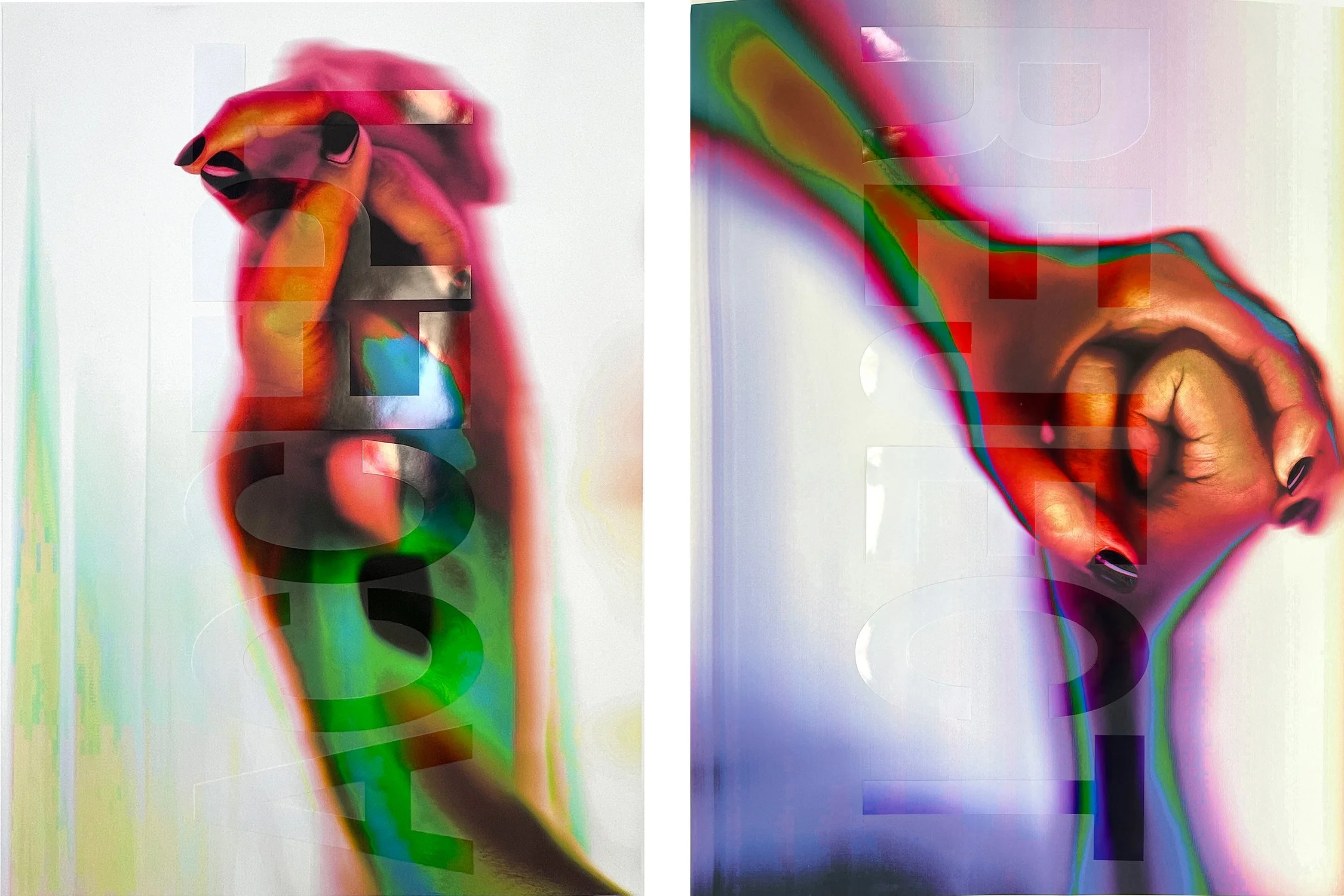
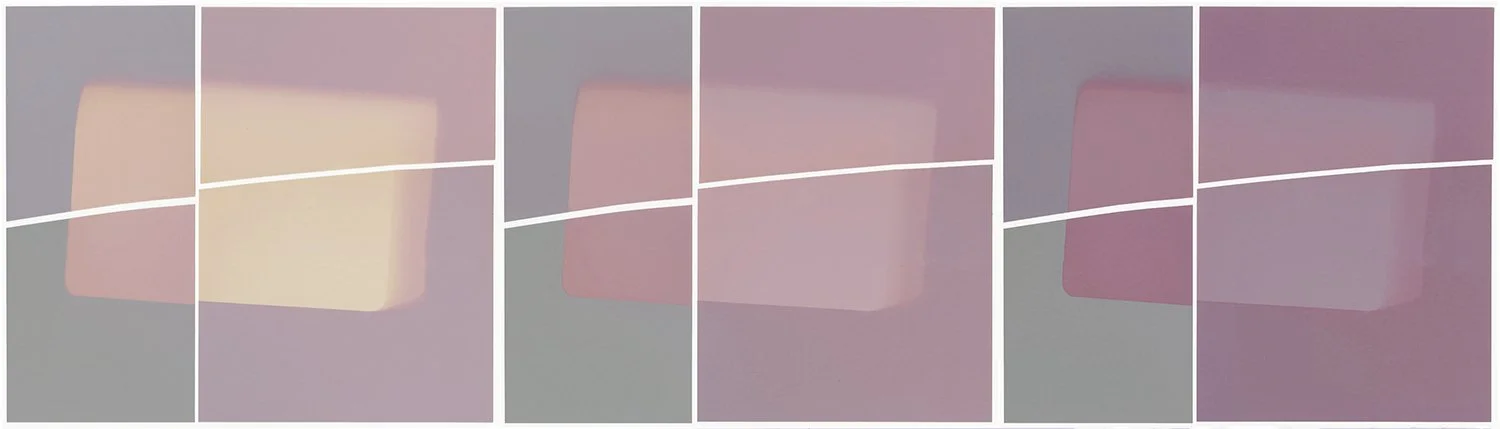
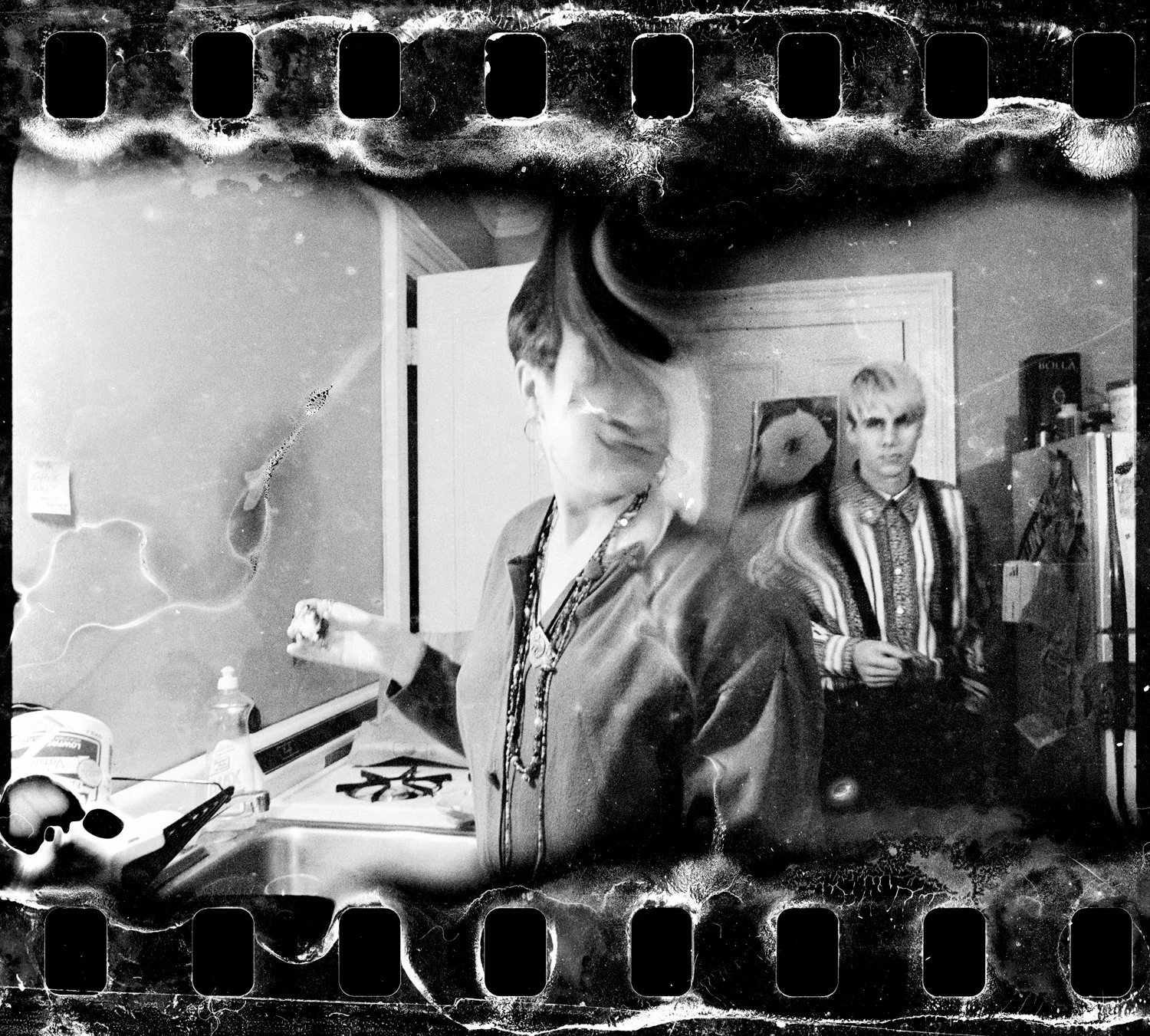
Upon seeing Lynne’s project, After the Fire: Water Damaged, I was stunned and fascinated immediately, and wanted to see and know more about what was happening. Truly, the horrific event of water flooding your photographic transparencies and negatives is enough to make one take a breather from the act of making. However, taking that same event and turning it into a rejuvenated journey back into photography is a rebirth of epic proportions. It takes a special person and the right circumstances to see gold through the haze of time.
The manipulation and degradation of the images in this project seem almost intentional in a way. In an age where AI is taking great strides forward, this is a project born from tragic events and the editing process, showing once again how creativity from the human brain will always flourish above anything made from machine learning.
Having this opportunity to speak with Lynne about her process and life in the arts is one I do not take lightly. This is something extraordinary emerging from a gifted soul that needs thoughtful examination. And knowing that this is a new jumping off point for a reignited career makes her one that we need to educate ourselves about, for she is also off to make new work. Cheers to you, Lynne.
Bio -
Lynne Breitfeller is a visual artist based in New Jersey. She explores both the mundane and unexpected details of everyday life. Human relationships, memory, loss, and humor are recurrent themes in her work. She received her B.A. in English from William Paterson University. After a two-decade career in text book publishing, she returned to the visual arts.
Her work has been exhibited at The Griffin Museum (Massachusetts), Center for Fine Art Photography and Colorado Photography Center (Colorado), Soho Photo Gallery (New York), Vermont Center for Photography (Vermont), Los Angeles Center for Photography and the Marin Museum of Contemporary Art (California) and Montclair Art Museum (New Jersey), amongst others. She won first place in Soho Photo Gallery’s 2023 National Competition and was a merit winner in All About Photo Women's Competition in 2023, the Rfotofolio Open Call 2022, and a finalist in the Lucie Foundation’s Carte Blanche in 2022. Additionally, her work has been featured in Fotofilmic, All About Photo, SHOTS, and Float magazines.
Interview -
Michael Kirchoff: What was it that got you into the visual arts in the first place? And then what brought you to return to it after stepping away for a time?
Lynne Breitfeller: I fell in love with photography in high school. I was a shy, quiet kid, and photography was a way to express myself. In college I was an English major, but it wasn’t until after college that I came back to photography serendipitously. While working at a community newspaper, I volunteered to photograph a national news story, and the newspaper ran my images on the front page. After this, I realized photography was something I wanted to pursue. I started taking classes at the International Center of Photography in New York and was a teaching assistant for a few classes as well.
Throughout that time of my life—primarily in my 20s—pretty much everything that I loved doing involved photography. No matter where I went, I always had a camera with me. I mostly took portraits of friends and acquaintances, staged and candid. My boyfriend (now husband) was a photographer, too, and our shared obsession helped us develop a deeper connection. Throughout the ’90s, our darkroom moved with us. First, it was the walk-in closet in our studio apartment in Hoboken, then in the basement of the brownstone in Jersey City where we rented the first floor. In 2000, we established another space—sharing a studio with two painters in an old industrial warehouse in Jersey City that had been converted into studios, galleries, and lofts.
In 2002, a fire broke out in the studio above ours, and though our space didn’t burn, water from above seeped into the metal cabinet where I stored my negatives, chromes, and prints and damaged a third of my archive. I tried to salvage some of it, but emotionally it was too much to process. I threw out most of it, but I couldn’t bring myself to trash it all. What I did keep was arbitrary, just to save myself the pain of losing so much.
For the next 15 years, I didn’t really create. I had a son and was working full-time at a textbook publishing company as a project manager. It felt like photography was better left in the past. I would occasionally photograph, but my heart wasn’t in it.
When my job was phased out in 2016, after more than 25 years, I volunteered at a local thrift store that doubled as a cat rescue organization and started taking pictures of the cats up for adoption, as well as some of the items for sale for social media, and that reignited my interest in photography.
My father was diagnosed with prostate cancer in 2018, and for several months, I took him for daily radiation therapy. Then, in 2019, my mother had heart failure and needed a pacemaker. From that point on, I was their primary caregiver. A few months after my mother’s operation, my maternal aunt moved into an assisted living facility near me, and I helped her as well.
It was during this intensive period that I started to feel the impetus to revisit my older work. With so many external forces demanding my attention, I felt like I needed to do something for my inner realm to create balance.
I began sorting through the plastic boxes where I relegated my work after the fire. The boxes were filled with an assortment of negatives, chromes, prints, and contact sheets. They were not in any particular order. I assembled a collection of portraits that I liked, made with my Rollei twin lens reflex, and had them scanned and printed. I displayed them at a few local libraries, but I still couldn’t deal with the damaged negatives, so I put those to the side.
MK: What is it that you get out of creating photographs? Is there an overriding theme in your work that you feel best represents you as an artist?
LB: So many things! I tend to be an overthinker. But when I am creating photographs, I act on intuition and instinct, and I am in the moment. I think of my process as a journey that allows me to tap into my subconscious and helps me understand things better. Oftentimes, ideas or feelings surface that I didn’t even know existed. Engaging in my creative process returns me to a sense of wonder, the way I did as a child. I find it to be transformative and healing in numerous ways.
Recurring themes in my work are the complexity and transience of relationships—our relationships with each other, memory and loss, impermanence, and humor.
MK: The project we are showing here is After the Fire: Water Damaged. Can you give us a description of how this collection of images came about?
LB: During the pandemic, I finally found the time, energy, and inspiration to sift through the compromised negatives and a few chromes that were in the boxes. I was curious to see what they were.
I began to review them on a light box with a loupe and with a film scanner app on my phone. I began piecing together the images that struck an emotional chord with me. Water on the emulsion had transformed the composition of the negatives, making them something entirely new and different. They had shape-shifted into something else. Our experience of remembering the past can change each time it is revisited; it is elastic. I realized that this was emblematic of what time does to all of us, to our memories, to our lives. There’s a certain beauty to the starkly different, damaged images, just as there is a certain beauty to the ravages of time.
MK: Can you take us through that initial realization of what had happened and how you turned it into something positive? Were there questions about how it might be received?
LB: It took a while to realize how positive this was for me. By working with the damaged pieces I was able to reconcile many things: the loss of my archive and to reassure my younger and future self that her work and passion were important.
It helped me cope with the pandemic, and to come to terms with other things such as the realities of my parents decline, and my own changing identity as mother/daughter/caregiver/artist. I was able to confront the trauma of the fire that haunted me and let it go, and see it in a new perspective. The images offered me the opportunity to revisit my past and recollect some of the events and people that had played a crucial role in shaping my life then.
When I first started this series I didn’t have preconceived notions about the images, and wasn’t really thinking about how they may be received.
MK: I initially saw a couple of images of this work when including one of them in a group exhibition, then later seeing more in Critical Mass this year. First of all, congratulations on the CM inclusion. And secondly, I applaud you for finding a way through tragedy to recognize through the editing process that you had something quite special here. Has this process brought about a strengthening or renewed feeling about editing your work?
LB: Thank you so much about the inclusion in Critical Mass. I was so surprised and really grateful and honored to be part of it amongst so many wonderful creatives, sometimes it still doesn’t seem real.
It took me a while to assemble all the images in this collection. I printed them out and taped them on a wall so I could see them as a whole and decide which images worked best together and resonated with each other. Taking these steps helped build confidence in my own decision-making, in trusting my instincts and the process, as well as recognizing the importance of letting things happen organically.
I have a supportive group of friends/artists and mentors who will often look at my work and help me navigate through times when I need some objectivity.
MK: In the collection After the Fire, is there one image to you that stands as a signature photograph or one that speaks loudest?
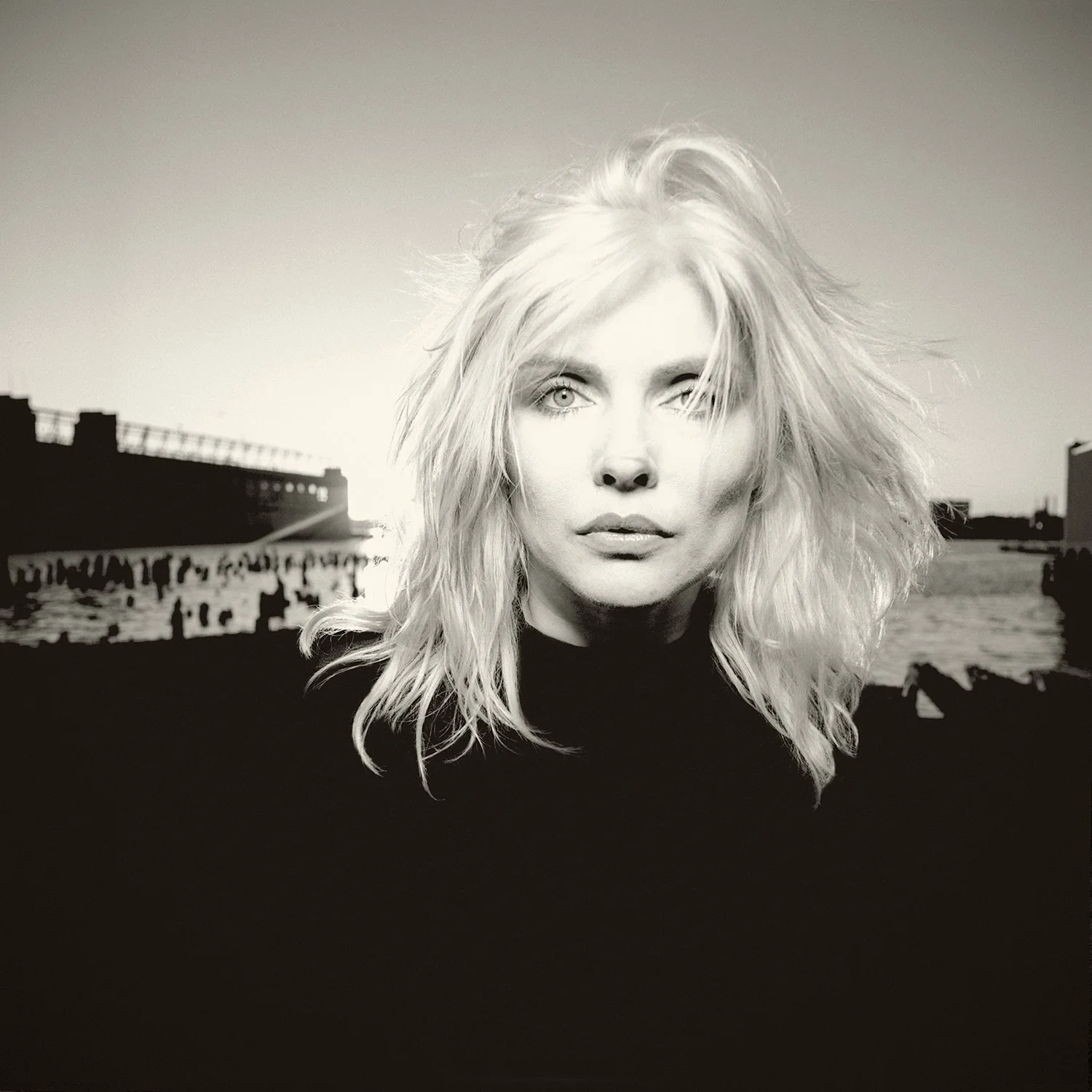
LB: One of the first images that made me pause was one of my self-portraits—the way the water damage had distorted it really spoke to me. Originally, it was the last negative on a roll of film, so it was just half an image. It was still me, recognizable as that girl in her 20s who identified as a photographer and artist, but it was also not me, someone who had been altered.
MK: How do you know if you’re ever really done with a specific body of work? Do you ever revisit images or collections to improve upon what you felt was previously finished?
LB: Revisiting the past in terms of my work is something I tend to do. With the passage of time, sometimes an image speaks to me in another way that I didn’t see before—that is, my perception of the work evolves as time and circumstances change.
For example, in the ’90s, I produced a series of portraits with Polaroid Type 55 positive/negative film and presented the work in two ways, as prints and silk screened on engraving plates. Recently, I experimented with these negatives with cyanotype paper.
I see series as a continuum: one can lead to another or grow out of an existing body of work, so I classify them as works in progress.
MK: This collection of photographs has you experiencing the fragility of analog processes firsthand. Is there now a turn toward digital techniques with the thought that something similar might not happen quite the same way? Though there is obviously still some vulnerability there as well.
LB: Yes, without the fragility of analog, the After the Fire collection wouldn’t exist. I love being able to hold something in my hand—the materiality of film is quite compelling to me as an artist. It is there, tangible and exists as an object.
I create images digitally as well and often have thought that something could get corrupted in some fashion. For me, I wonder about how digital files created today or ones we have on our drives will be accessible in the future. Will they be retrievable?
MK: What do you feel is the best way for you to grow as an artist? Are there any fears behind treading new waters?
LB: There is always fear and doubt in going into uncharted waters. But on the flip side, fear can be good—sometimes it is good to embrace it, use it as a catalyst, and work with it, not against it. This way it doesn’t own me.
Each day I try to remind myself to continue moving forward, to follow through on my thoughts and instincts, and to not get in my own way. It may take a bit to get there, but I try not to give up if things don’t go exactly as planned. I find perseverance is a key asset. I make a lot of mistakes. I try to remain open and not judge.
I’ve been taking workshops to keep learning. Being part of the photographic community is important for support of one another and for the energizing exchange of ideas.
MK: Over the years, the tools we use to make photographs have changed dramatically, not to mention the vehicles we use to promote our final works. How do you keep up with these changes, and do you see any further significant change as lens-based media continues to progress?
LB: I had stopped photographing during the time when the transition from film to digital was happening, so I sort of missed that stage when people were really making that shift.
For the most part, I am pretty low-tech; I don’t keep up too much with technical changes. If there is something that interests me, I will investigate and read up on it and ask those who are familiar with it to share their expertise and go from there.
That said, though, I have been using my iPhone as the main tool for my caregiving project. The iPhone is always on hand and isn’t too obtrusive. I keep that current for my needs.
MK: Do you have any other creative pursuits, or has photography become the one obsession that always takes precedence?
LB: Photography has always been my passion, except for my dormant period, those years when I wasn’t creating images. Thankfully, it has again become part of my everyday life and usually takes precedence over other pursuits, creative or not.
Several times a week I take long walks in the woods. This is almost a sacred time. It not only quiets my mind and is restorative, but also serves as an inspiration and has become vital to my creative process.
Here’s one that may seem a little surprising, but thrifting truly gets my creative juices flowing—this is perhaps the one passion that has never ebbed through any time in my life.
MK: How do you see your work progressing in the future? Do you have anything new you are currently working on that we should be on the lookout for?
LB: I have been working on a project, Today is Yesterday and Tomorrow, which grew out of my journey as a caregiver to my parents, who had dementia diagnoses. Making the work became a refuge — something steady amid uncertainty.
Caregiving is intimate, tender, exhausting, and often isolating. Over time, one’s sense of self blurs in the constant tending to another. Dementia brings a particular kind of grief — watching someone you love slowly change, losing them in increments.
What stayed with me most was witnessing my parents’ bond and how it sustained them even as their capacities diminished. The experience reshaped my understanding of aging, care, and connection — teaching me that even as memory fades, love remains, and presence becomes everything.
The work is part of Reservoir, an exhibition exploring the global crisis of loneliness through visual storytelling, at the Los Angeles Center of Photography.
(Updated 3/1/26)
*This interview originally posted in its entirety at Analog Forever Magazine, March 17, 2024, here.
You can find more of Lynne’s work on her website here.
All photographs, ©Lynne Breitfeller