
David Michael Kennedy
If you are unfamiliar with the work and person known as David Michael Kennedy, I have to tell you that you’ve been missing out. Thankfully, I’ve had some time with him and was able to get some history and stories out of him, so you too can become one with the man. And does he ever have stories! This is an interview and discussion that could have gone on for days or weeks without exhausting the images and words of a man who has broken the mold of what a photographer can accomplish.
There’s a resilient and lasting nature to everything he touches. Like the image was meant to be as he sees it, and there is no alternative to it that could be any better. The images he has produced, no matter where or how they were made, stand the test of time.
I see DMK as a sage of the photographic arts. He’s no-nonsense, truth-telling, and compelling as both an artist and a person. I still can’t believe that I had this time with him and can call him a friend, for it is his influence on the lexicon of photography that helps to create future masters of the medium.
And while he makes photographs of all things, his view on portraiture is as pure as the images he has made. So with that, I’ll leave you with this quote from the interview to set the tone for all else. Thank you, David.
“Celebrate each person as a unique individual and search to find their true spirit – and do it with respect and dignity.” ~ David Michael Kennedy
The Blues Smile, Muddy Waters, NYC, November 1980
Bio -
David Michael Kennedy's career spans more than 50 years and includes an 18-year stint in New York City, where he was known as a specialist in photography for the advertising and music industries, producing album covers and editorial spreads for artists that include Muddy Waters, Bruce Springsteen, Loverboy, Blondie, and Bob Dylan.
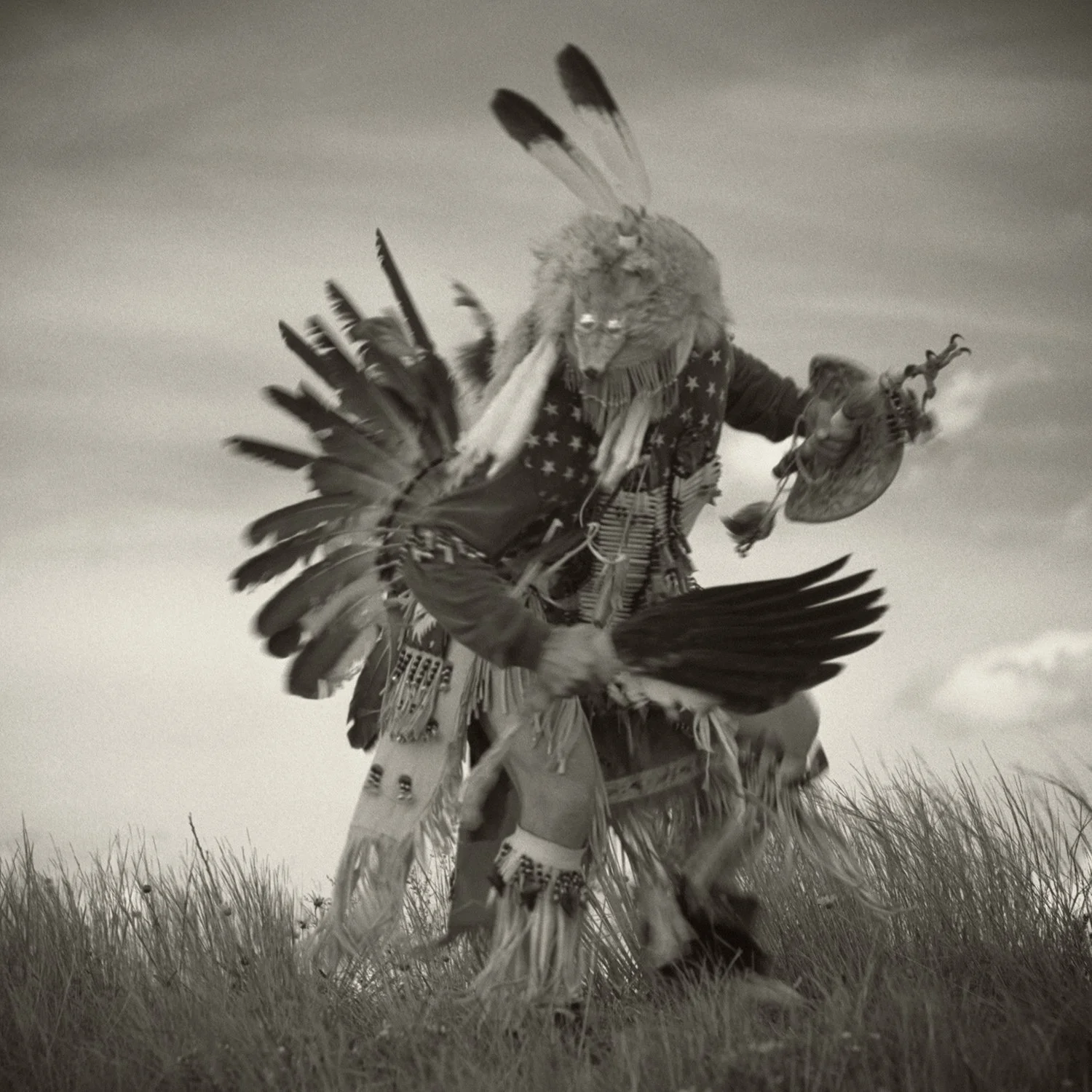
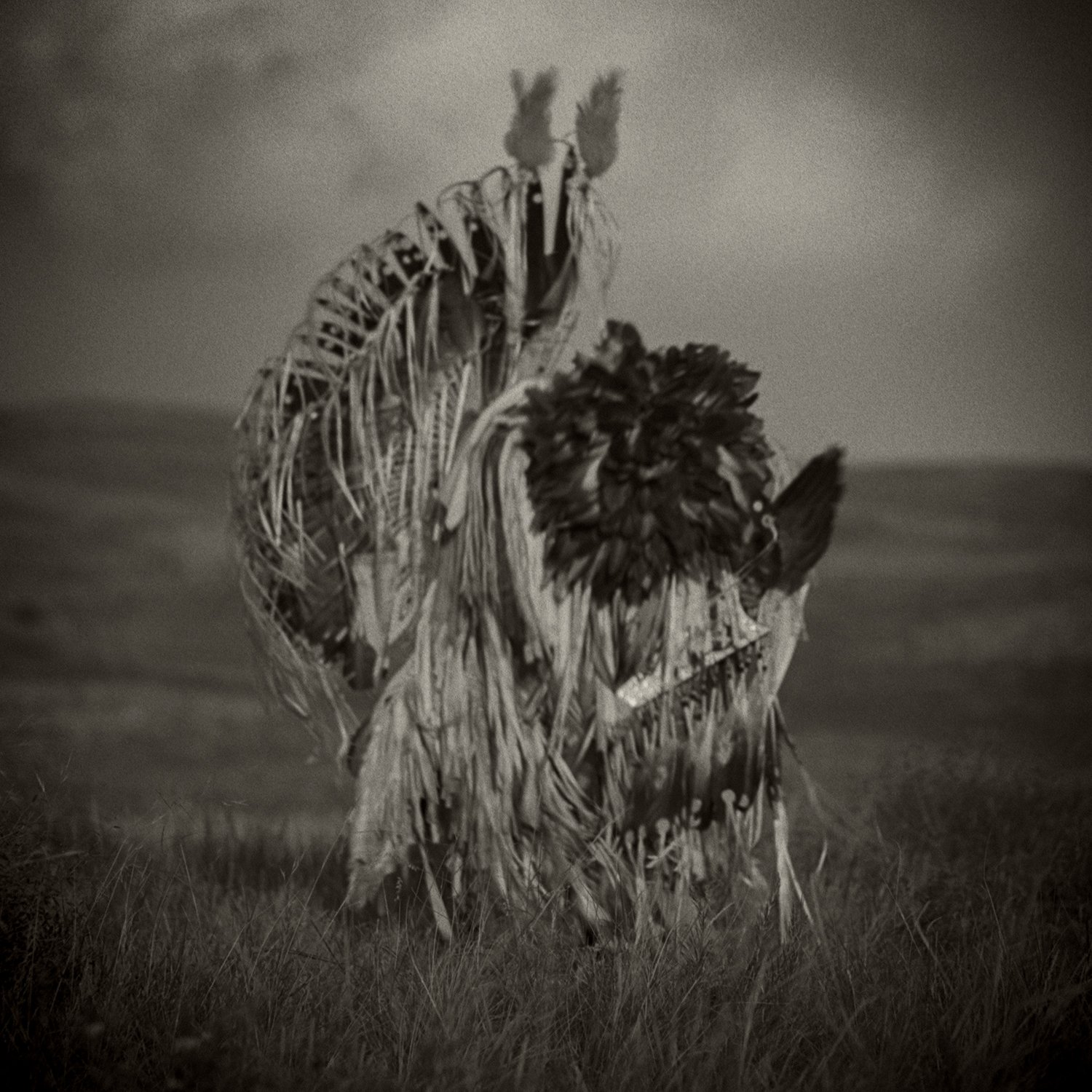
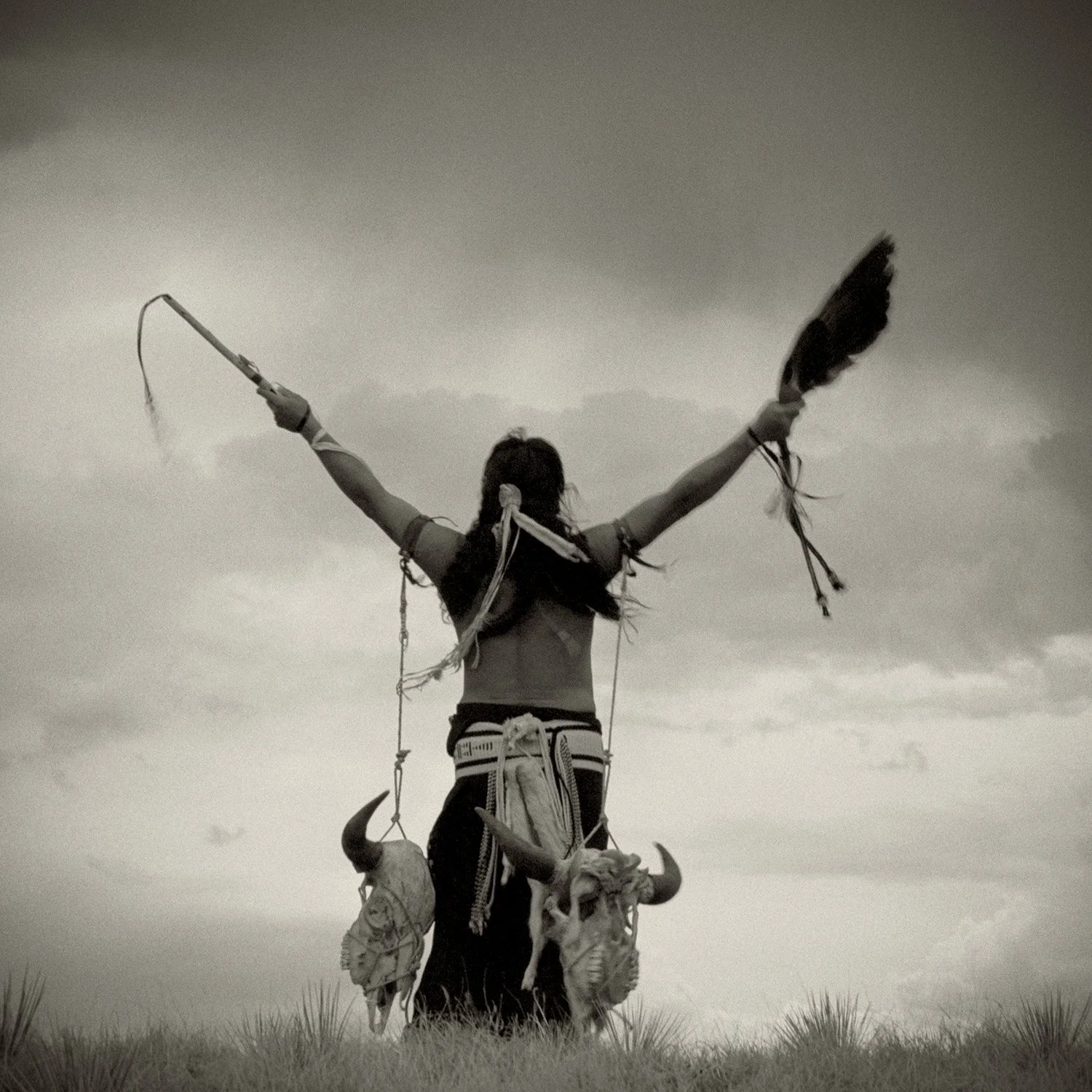
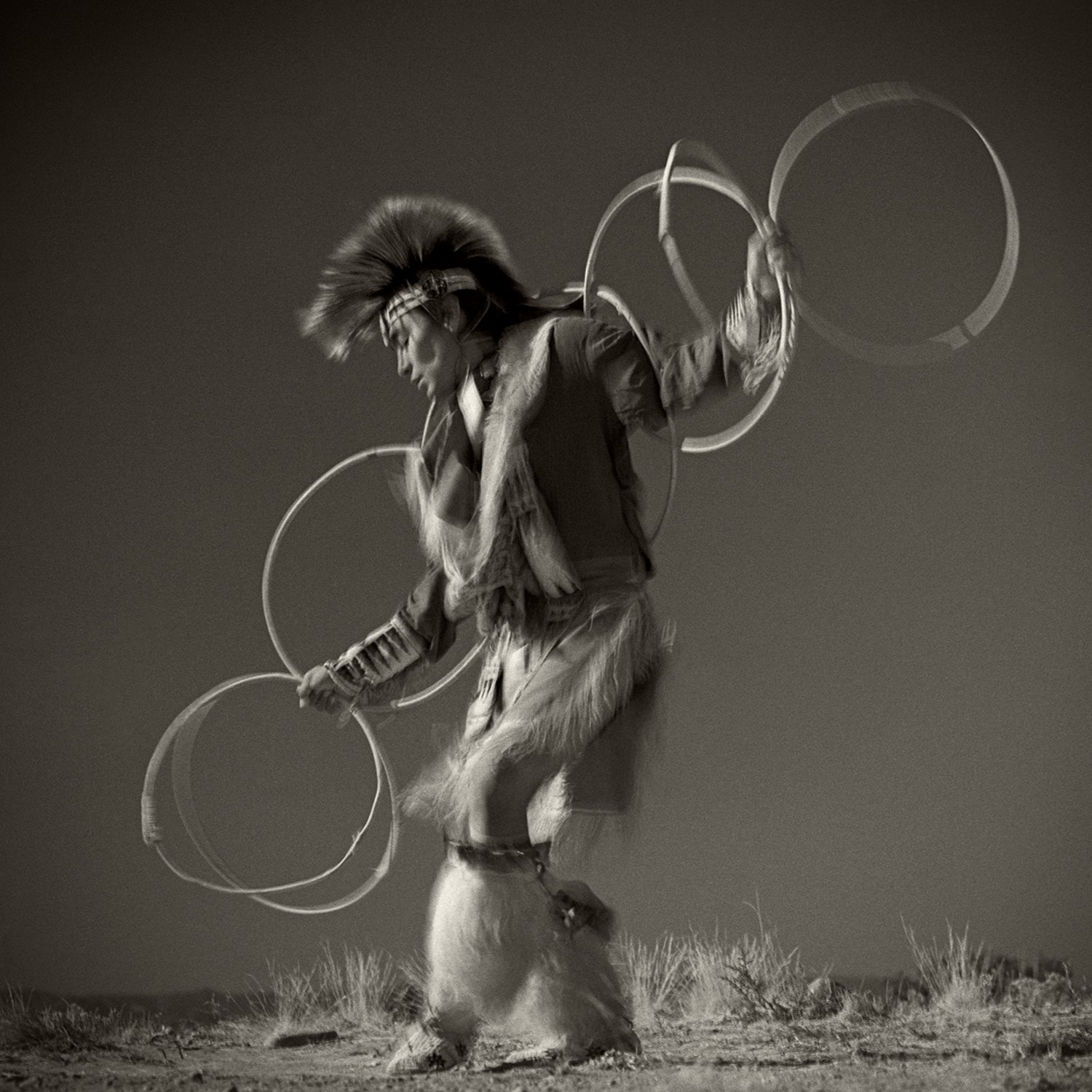
In 1986, Kennedy moved to northern New Mexico and began documenting the Western landscape and Native American culture, and became involved in Native American causes. His photographs of Native Americans and their culture have been exhibited worldwide.
William Zimmer writes that "the respectful Indian pictures bring to light aspects of [Native American] culture that are often hidden". Kennedy's works are held in many private and museum collections, including The National Portrait Gallery, The Smithsonian Institution, The New Mexico History Museum, The Wittliff Collections, The Southwestern & Mexican Photography Collection of Texas State University, and The Harwood Museum of Taos, NM.
Interview -
Michael Kirchoff: Thank you for joining me, David. What was it about the photographic arts that made you want to take it up as a profession? Were there any significant people or events that drove you in that direction?
David Michael Kennedy: Well, first, I've never really thought of it as a profession. It's just been a passion. When I was about 16, I had a neighbor who was into art, but it was when I was 17, I ended up taking an acid trip, and toward the end of the trip, I picked up a Nikon camera. It was sitting on a fireplace mantle with a 55mm Micro-NIKKOR lens on it, and I took it outside. It was an early spring morning, and there were dew drops on the leaves, so I started taking the macro lens and focused in on all these shapes and colors and things. I was fascinated and thought, this is what I want to do with my life. Being able to isolate little details, and make them important, and just say yes to life was just really magical. That morning I decided I'm going to be a photographer, and I never looked back.
MK: Well, that's a very different answer than I would normally receive.
DMK: For years, I never told anybody that because of the stigma, you know what I mean? Finally, I just decided, no, that's why I got to be what I am today. So it's important to say. I mean, just when I put that camera down, Michael, I said this is what I'm going to do with my life from that moment on.
MK: I have to love the honesty. It's a great answer! So then, looking back to the beginning of your career, what is it that you'd done to make your start in the industry a little easier?
DMK: My first step was to decide that this is my life's passion. The second thing was going to learn everything I possibly could about the technical aspects of it, so that I had a really strong foundation to go out and make the photographs I wanted to make. After the acid trip, I went to Brooks Institute of Photography in Santa Barbara. I spent one year learning how light, film, and chemistry all interplay with each other to create images. We spent days testing different combinations of paper and developer and plotting curves until we had a kind of complete understanding of how and why it all works. Then the second year was about the art of photography, but I left school then because once that technical part was inside of me, I needed time to develop my own ways of seeing the world.
MK: Speaking of ways of seeing the world, what is at the core of your work? Is there a theme that runs through everything you create in photography?
DMK: Well, you're probably going to hear me say this a lot. But the theme is really just saying yes to life. I don't think there's any kind of body of work or anything specific. It's a celebration of my life and the experience I've had. Whether it's the people I meet or the landscapes I travel through. I guess I'm constantly looking for texture and meaning as I travel on this journey. I started out as a fine art photographer in Northern California, just doing photographs of landscapes and people. Then I ended up moving to New York, only to have back surgery, and I got stuck there with no money. Of course, being in New York City, the only thing I could do was start working as a photographer. That really kind of changed the focus of my work.
MK: Now that you mention New York, during the 70s and 80s, you began photographing editorial and advertising images, with a particular emphasis on album covers for the music industry. Now that you were stuck there, did this become the dream and focus of your career then? Did it take anything special to make it happen the way you wanted?
DMK: Yes. When I got to New York, and I didn't have any money to get back to California, I had to start getting photography jobs. But the first thing I did was work in a photo lab, developing film and printing, which was a great experience. And then, from that, I started assisting a couple of really wonderful photographers. One of them was a still-life guy who just taught me incredible lighting.
Eventually, I ended up opening my own little studio, and of course, what do you do but fashion work? So I did fashion for a little while, but it kind of bothered me. I really kind of felt that I was doing sort of a disservice to women, so I segued a little bit into advertising for a while. Unfortunately, I hated that too. Then, an art director I knew at an ad agency I was working for moved over to Columbia Records, and she started giving me work shooting photographs for the music industry. What I really wanted to do was covers, so I came up with an idea to do a magazine spread on the most important art directors working in New York City at that time. I called a couple of trade magazines, and they said, well, yeah, sure, we'd love to see that. So I started calling all of the heavy-duty art directors in New York, telling them that I was doing an editorial spread on the most important art directors in New York. And so, of course, they had to say yes, because if they weren't in it, they weren't going to feel good. So I got 15 or 20 of the folks to come down, and they got to see the studio. They got to see what the environment was like, and I think most importantly, they got in front of the camera and saw how I related to the person I was photographing and how comfortable I made them feel. Within about four months after doing this little project, my entire business was shooting album covers and editorial spreads.
MK: So that was a brilliant move.
DMK: Yeah. And, of course, it never got published. To this day, when I talk to them, we all laugh about how I just hooked them and reeled them in. They couldn't say no. So that's how I got into shooting the album covers and the editorial stuff. None of my career in New York was planned. It just kind of happened. It was very serendipitous. My whole career has kind of segued from one thing to another. It's just been a journey that I've not tried to control. I've let it kind of flow and become what it was.
Clarence Clemons, NYC, December 1985
Delores and Nicholas, October 2013
Don King, NYC, November 1983
Lauriano Anaya, Albuquerque, NM, August 1986
Willie Nelson, Brewster, NY, July 1990
Magic Eddie #2, Espanola, NM, date unknown
Arthur Ashe, NYC, November 1990
MK: Well, in addition to what you've just told me, I know that you have so many incredible stories from your years photographing some of the world's greatest artists and musicians. I'm sure we could fill this entire interview with such stories and their corresponding images. But I'd like you to tell a story that I feel speaks volumes about not merely who you are as a photographer but who you are as a human being that does people right. Can you give us the story about the Muddy Waters album cover shoot?
DMK: Oh yeah. Well, the Muddy Waters shoot was for the King Bee album cover. I'd gone to a couple of shows and heard him play, and then we did the shoot, which was just of him. During the process of hanging out together and doing the shoot, he had told me that for years, he wanted Columbia to put a portrait of his family in the liner notes on an album, and they'd never done it. So I was good friends with John Burke, who was the head guy at Columbia. So, you know, I kind of had a little bit of power, I guess. So after I finished the shoot, I just put the contact sheets in a drawer and forgot about them. About four or five days later, I got a call asking where the hell the contacts were and that they needed to get this album cover produced. I just said I'm not sending you anything until you guys keep your promise to Muddy and you send me down to Chicago, so I can do the portrait of his family. That night, I was on an airplane to Chicago. The next day, I spent with Muddy's family and did the family portrait, which ended up on the liner notes for the cover.
MK: I think that's a wonderful story. And on top of that, it's an amazing, beautiful photograph of his family.
DMK: Yeah. They were just incredible people. I mean, Muddy, everything about him and his family, it was just magical.
Muddy Waters, NYC, November 1980
Muddy Waters and Family, Chicago, Illinois, November 1980
MK: Your ability to find a connection with your subjects is very evident in your portrait work, no matter who is in front of your camera. But come on, how do you connect with someone like Bob Dylan? Doesn't that ever get intimidating to you?
DMK: I was incredibly intimidated! I've worked with all kinds of really great people, but Bob Dylan – you don't get any higher than that. So my assistant and I flew out from New York with all this equipment, and when we got to the airport, we loaded up the van, and I gave my assistant the day off. I drove up to Dylan's place by myself with this truck full of stuff. I kept thinking, how do I level the playing field? How do I put us at an equal level? I get to Dylan's place, and he comes out, and he's wearing jeans and barefoot, and he's got two beers. We sat for a couple of minutes and talked, and then he asked what we were going to do for the shoot. I said, Well, Bob, you know, I just had back surgery, and I've got to unload all this heavy gear. Can you help me get it out of the truck, please? So here's Dylan helping me unload all the equipment. The first shot we did was with a canvas background, so I had him up on a step ladder, taping the background up to the wall of his house. It just created this dynamic between two guys hanging out, making pictures. He loved it. There was no fancy nonsense going on. It was really easy, simple, and wonderful, and got him engaged in the process.
MK: That's amazing. Yes, exactly. He became part of the process. That's your ability to find a connection with your subject and how vitally important that is.
DMK: Without that, you're not making portraits. It really is a process between you and the subject creating this image. Forget the camera. I try to come to each shoot with no expectations and allow each subject to have a life of their own, and each session to sort of develop in a very natural way. Celebrate each person as a unique individual and search to find their true spirit – and do it with respect and dignity. Also, eye contact to me is really important. I hate to be cliché, but they say the eyes are the windows to the soul, and you know, in a lot of ways, it's true.
MK: After a number of very successful years working in NYC, you walked away and headed west to New Mexico. What prompted this drastic change of scenery?
DMK: I got stuck there for 18 years because I was doing some amazing, wonderful stuff. It was really fun, but I was getting tired of the city, and I wanted to get back to the country and my roots in landscape work. I realized that I was in a very comfortable position, but if I was going to continue, I was going to have to grow the business. I'm going to have to do more advertising and another big push to get up to the next rung of the ladder. I really didn't want that. I also saw the business changing. It was going to the digital world, and that changed the business. It changed the workflow. I wasn't really interested in it. I was a film photographer. I knew what I was doing, and I didn't want to spend a huge amount of time learning how to work the computer and all the different programs. So my wife and I just packed up, burned all our bridges, and left New York for New Mexico.
Bob Dylan, Zuma Beach, California, October1985
Bruce in Chair, Brewster, NY, June 1982
Bessie May Whitlatch, Welder, Lincoln, Nebraska, July 1999
Devo, NYC, November1985
Michel Petrucciani, NYC, January 1986
Jesse Jackson, November 1990
Mom's 100th Birthday, Easton, Connecticut, February 2008
MK: Ah, yes, there it is, the digital dilemma. With that, we are seeing a trend of more and more photographers taking on alternative or historical processes. Do you feel this is exactly that, a trend, or that possibly people have a desire to return to the way we used to create work before the pixel took over?
DMK: Technology is taking over, and I think a lot of people are going back to traditional photography because they don't want to have that technology in their lives. If you're working digitally, you spend a lot less time photographing and more time working on the computer. I think a lot of people are feeling they don't really want to be as plugged into the technology world and are really enjoying getting back to something that's more of a hands-on kind of organic process. I do think that there's a lot of people that are returning to the alternative processes. I also think that as more and more people get inundated with digital work, they're starting to get a little bit more of an appreciation for what the analog world is.
MK: I'm in complete agreement with you there. And again, this segues into my next question perfectly. Since you brought up historical processes, I wanted to mention your expertise with the platinum/palladium process in creating your stunning prints. What is it about this type of printmaking that captured your attention?
DMK: First, I really love the hands-on approach to the print. From using a negative to hand-coating the paper and then seeing the image appear in the developer, it's just magical. It's all about my relationship to that emulsion and to that piece of paper and to that image. The tactile quality just always amazes me because each print is really unique. I love the total range and the depth of the prints because the chemistry sinks into the paper and becomes a little bit 3D. It's also the challenge of the process. There's truly a mixture of alchemy, science, and just plain luck. I really love silver gelatin printing as well, but that has become incredibly predictable to me, whereas platinum/palladium printing always has kind of an excitement to it.
MK: Yes. It's that hunger I love about how you conduct yourself, being so passionate about the photographic medium. You are as excited about the images you may make tomorrow as much as the ones you made decades ago. You're also a supporter of what others are doing, just the same. What keeps that energy alive and <smiling> why is it analog photography?
DMK: My hunger is to keep searching. When I go out, I don't go out with expectations. I don't think, okay, I want to do portraits, or I want to do landscapes today. I just want shades of light. If we want to use the word hunger, the hunger is just that constant search for the things that fascinate and amaze and confuse me. That's an exciting place to be. It's also really rewarding for me to teach my process to other people. Teaching is an enjoyable and joyful experience, particularly when you get someone whose work is really wonderful, and you can see it evolve.
I think one of the things that draws me to analog is that it's always a surprise. You're out there looking through the viewfinder, making these decisions, and then you push that shutter, and it's breathtaking! At the same time, you're really not quite sure you've got what you think. Then, when you get in the darkroom, and the film comes out of the wash – you unroll the negatives with water dripping down your arm, and you're going through it frame by frame. You're saying, 'oh, I missed that and that and that' – then all of a sudden, you hit that frame where you nailed it. You got it. That's such a rush! And then you get to transform the negative into the final print, and you see it come up in the developer, saying, 'Wow, I did it.” I don't think anywhere other than analog do you get to have those experiences.
One last thing that I like about analog is that my equipment hasn't changed in almost 50 years. I shoot with Hasselblad, Pentax 6x7, Leica, and a 4x5 Graflex Super D, which I love. And I use Tri-X and develop in Rodinal. It's like they've become my friends that I kind of share my life with. There are only two additions that I’ve added over the years - a 120mm Petzval lens made special for the Hasselblad and a handheld camera that I built myself for shooting 4x5 Polaroid positive/negative film from when I went on the road for two years. It’s retired, though, and now it sits on a shelf reminding me of the days we spent together, you know?
Buffalo, Hayden Valley, Yellowstone, October 2005
El Malpais, May 1997
Encampment, Porcupine, South Dakota, July 1991
Wigwam Village, Motel #6, Holbrook, Arizona, February 2005
Monument Valley, February 1995
Long Horn Head, Liberty, Texas, June 2004
Heather, Malaquite Beach, Texas, June 2004
MK: You’re talking our language, David – like the perfect analog spokesperson. Now, you mentioned going on the road. I believe it was around 2004 that you traveled across the U.S. with the sole purpose of making photographs. What was that about, and how well did it go for you?
DMK: Well, the first thing that happened was I was in the middle of a divorce, and my house burnt down, except for the wall that separated the house from my business and work area. The fire stopped there. So all my negatives and all my prints were fine, but everything in my personal life was destroyed. So I ended up spending a year rebuilding the house and going through the divorce. During that time, I was looking at America and how it seemed to me that society was getting greedier, and there was just a real fight going on in here. I couldn't believe what had happened to the America that we used to be in. I thought, you know, if I get an Airstream and take off for two years and travel around the country to meet the people that really make up this country, I’d find out who they were and how they were feeling. I guess I was kind of looking for the roots of America.
When I started the trip, I thought it was going to be about landscape photography, so I took the handheld 4x5 with a 65mm Schneider lens as the only camera that went with me. I mean, I took one extra lens because the only thing that could break was the shutter in the lens. But after being on the trip for a relatively short period of time, I realized that the people were really as important, maybe even more important than the landscapes. So I started doing an awful lot of portraits on the road, too. I was traveling in a big blue diesel pickup truck, and in the back of the pickup truck was a red Indian motorcycle. Then behind that was a 28-foot, 1959 Airstream trailer. It looked like a traveling circus. I covered all the back roads through pretty much the whole country. I'd be driving along and see people out in their yard doing something, and I’d just stop and walk over and introduce myself and tell them what I was doing and that I wanted to make their portrait. And in the two years, I only had one person say no. So the whole trip was just rediscovering the people in the landscapes of America, finding out what's going on underneath what we see as normal society.
MK: And you did this for two years?
DMK: Two years and 2500 4x5 negatives. Oh, and at night I'd set up a small printing area in the Airstream and make little platinum/palladium prints.
MK: Wow! That’s incredible. Well, this entire interview is filled with great information. However, I still would like to ask you, with your vast experience in photography, if you have any thoughts or advice for those willing to take the plunge into photography as a career. Any words of wisdom?
DMK: Basically, follow your heart and follow your passion. That's the only wisdom I can give you.
Find a photographer whose work you like and work with them. In the beginning, I had many assistant jobs that really amounted to no pay, sweeping floors, and just being a gopher, but I was immersed in that photographer's world and learned so much just by osmosis. Also, unless you're so totally obsessed with photography as a career, I don't think people should go there. I think it makes more sense to find a day job and keep your photography as your own personal vision quest, if you will. In some ways, I envy people who do that because if you're doing it professionally with the stress of making images that make you money, sometimes that can overshadow your true work and kind of cause some conflict. But if you're really driven, and you have to do it, then that's what you need to do.
Leonard Peltier, Leavenworth Penitentiary, May 1989
David Michael Kennedy and Leonard Peltier, Leavenworth Penitentiary, (self-portrait) May 1989
MK: Okay, David, how about an invitation to experience what you have to offer in your darkroom and gallery in El Rito, New Mexico? What might one discover in stopping by for a visit? Don't worry, we'll call first.
DMK: Well, I have three different workshops that I do, and they're all one-on-one and five days long. I do a landscape workshop, a portrait workshop, and a darkroom platinum/palladium workshop. But in terms of just stopping by, I always welcome people here. I like it when people come by and really love sharing the processes and the stories around the images, as well as showing people my work. If I'm working on a print in the darkroom and you come by, I'm going to bring you into the darkroom. I always find that people enjoy a journey into the darkroom and learning a bit about the process, whether it's platinum/palladium or silver gelatin. It amazes me how many people with an interest in photography have really never been in a wet darkroom. And when people come in, and they see things under a safelight, with the sound of running water in the wash trays and the music in the background, it's kind of a mind-blowing experience. It also sure beats the hell out of sitting in front of a computer screen all day. I also think that coming here and seeing the work and my working environment brings more meaning to the images, and it really makes them much more personal. It's just a good experience.
*This interview originally ran in its entirety at Analog Forever Magazine, Edition 4.
You can find more of David’s work on his website here.
All photographs, ©David Michael Kennedy